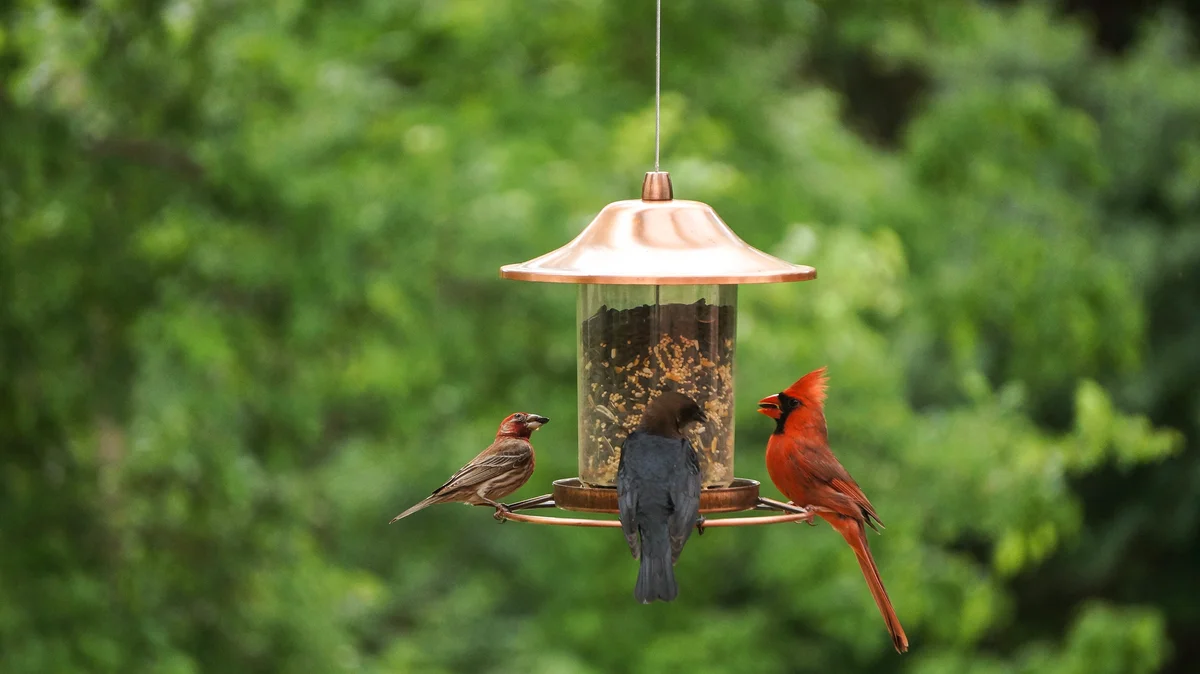
It's easy to see why so many people love birdwatching. There are so many species to learn about with different personalities and habits. Plus, it's a great way to spend time in nature enjoying your favorite birds, with the hope of spotting a rare species. But even the common birds that inhabit our backyards are fascinating to learn about! If you're just getting started on your birdwatching journey, get to know the birds on this list that you're likely to see in your yard. Then find out how to get them to visit more often!
Ruby-Throated Hummingbird
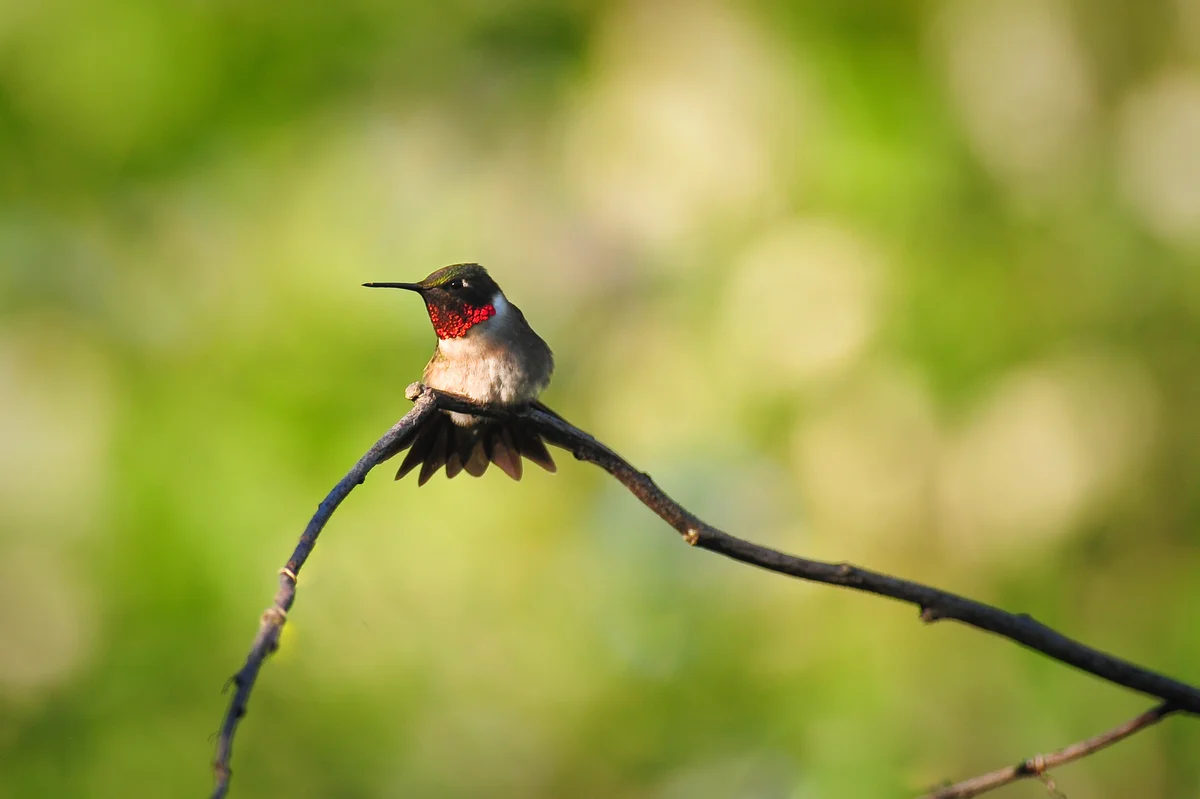
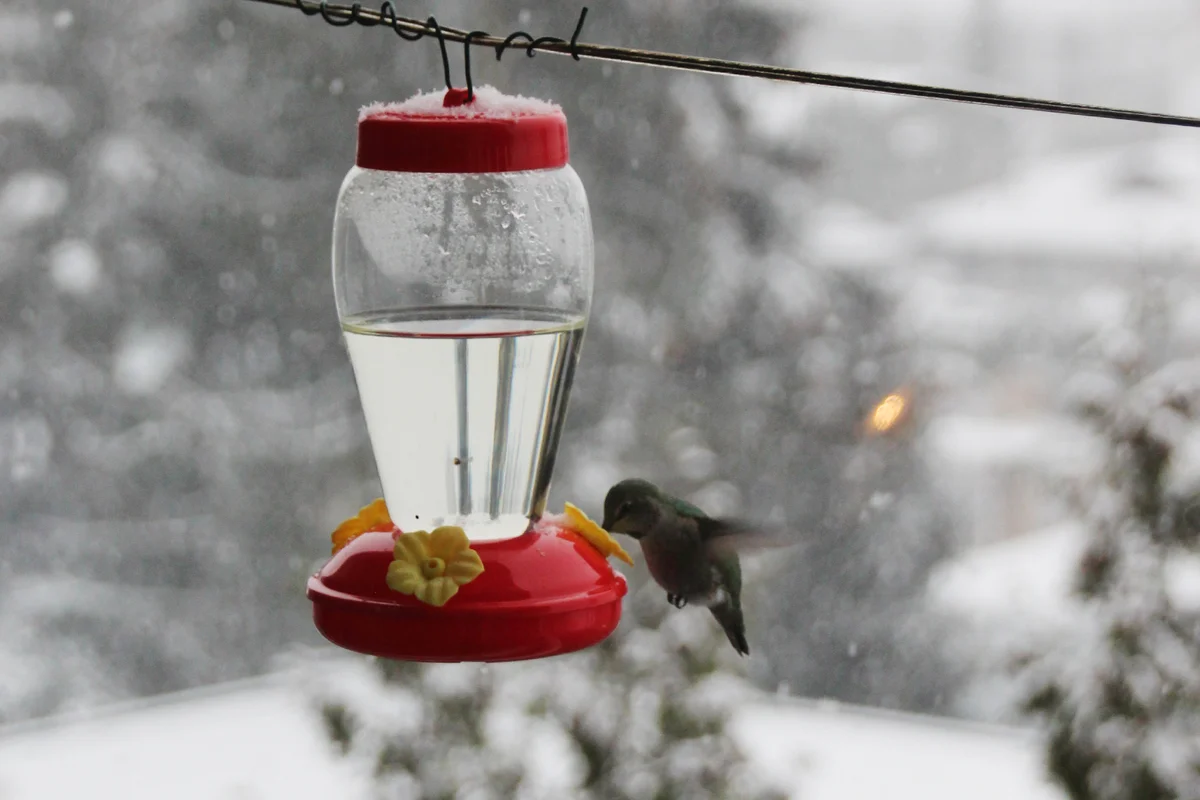
The ruby-throated hummingbird is a welcome visitor in most people's backyards. They are a small and quick bird with wings that beat so fast they produce a humming noise. Males have green bodies with red throats, while females will have green bodies but white throats. Attract them to your yard with a hummingbird feeder that stores nectar, or plant flowers such as bee balm, hostas, petunias, or butterfly bush.
Fast Fact
The hummingbird's wings flap up to 70 times per second - more than 4,000 beats per minute!
Downy Woodpecker
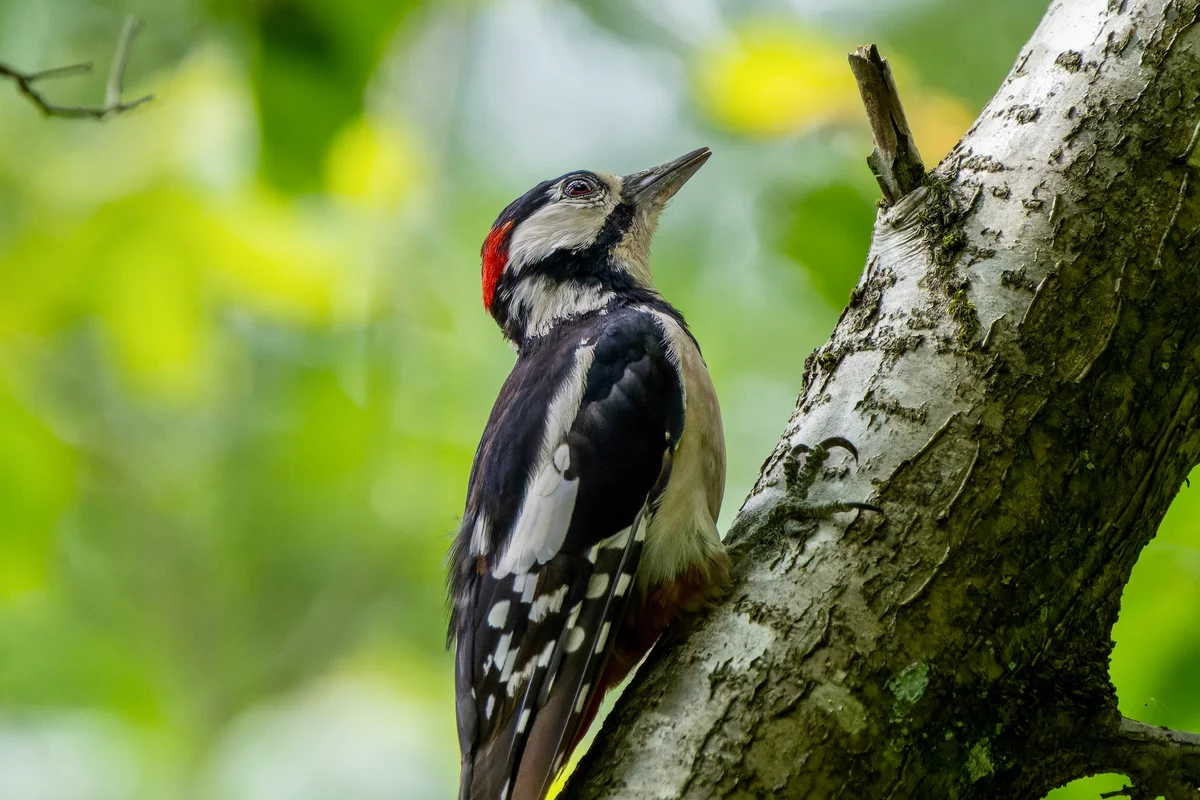
You might hear the downy woodpecker before you see it as it repeatedly pecks away at trees for its food sources. While there are several types of woodpeckers, the downy woodpecker is one of the more common varieties (and also the smallest) you can expect to see. It has black wings with white speckles, a white breast, and a mostly black head with a small red patch.
They'll love a suet birdfeeder or you can try smearing peanut butter on your tree to attract them. They also enjoy a private and clean bird bath.
Fast Fact
Woodpeckers' tongues actually wrap around their skulls, providing extra protection for their brains while they're hammering away at trees.
Eastern Bluebird
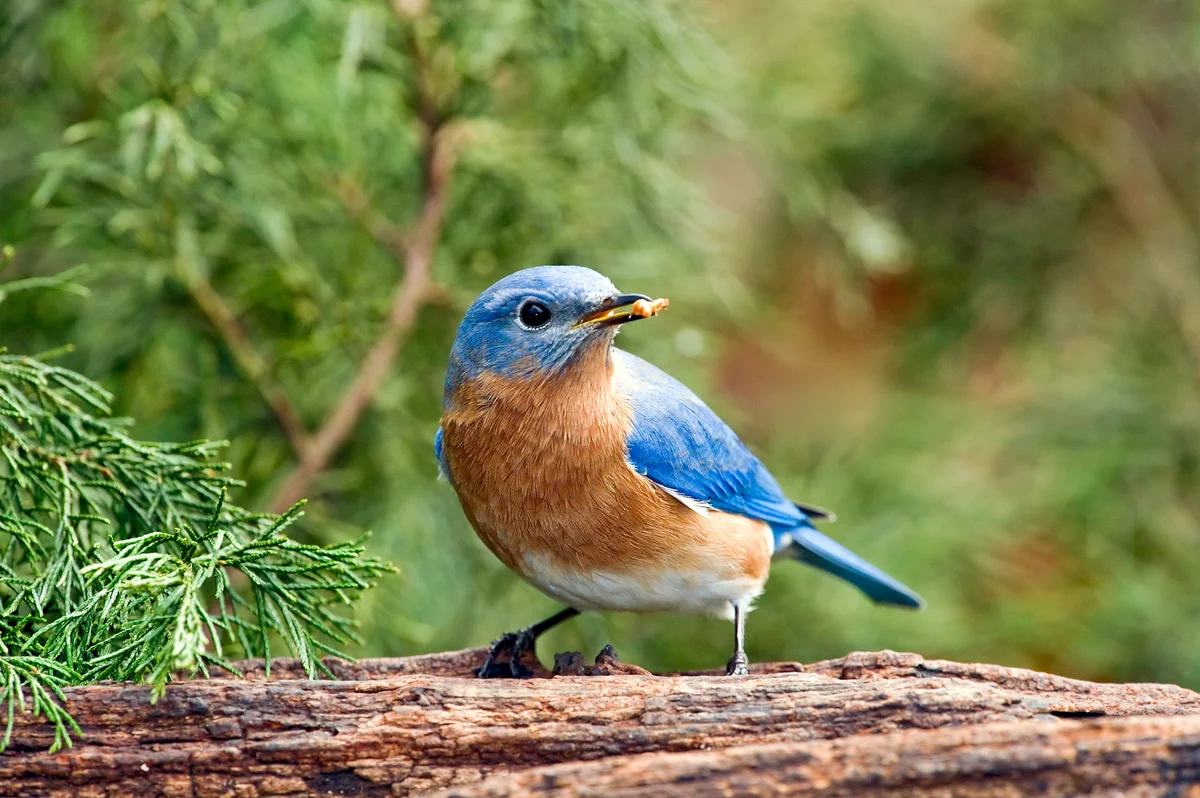
The brown breast and royal blue wings of the Eastern bluebird make it a beautiful bird to spot in your yard. This bird loves its mealworms, so add them to your birdfeeder if you're looking to attract them. You might also want to plant blueberry or juniper berry bushes.
Fast Fact
Eastern bluebirds aren't the best at building their own nests. They like to inhabit old nests, or you can install a nest box that they'll surely appreciate.
Black-Capped Chickadee
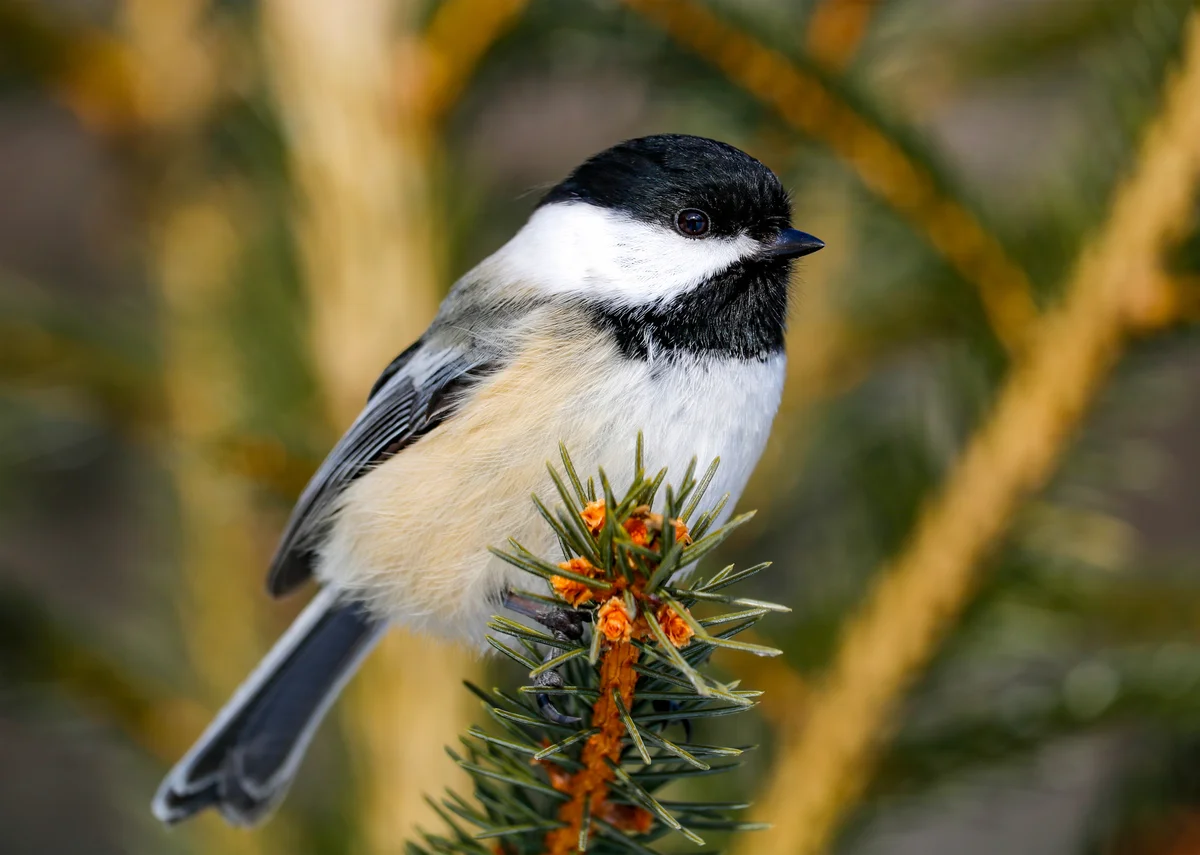
The chickadee is a very common (and very cute) backyard bird you might spot outside your home with its flock. It has a black cap and throat, bright white cheeks and body, and black and gray striped wings. Their call sounds just like their name, "chick-a-dee-dee-dee". They love insects, berries, and seeds, so if you've got berry bushes and a good hanging birdfeeder, you'll be in good form to attract some of these adorable tiny birds to your yard.
Fast Fact
Chickadees are very friendly and curious, so if you build up enough rapport with yours, you can hold out seed in your hand and see if you can get one to land on you to feed!
American Robin
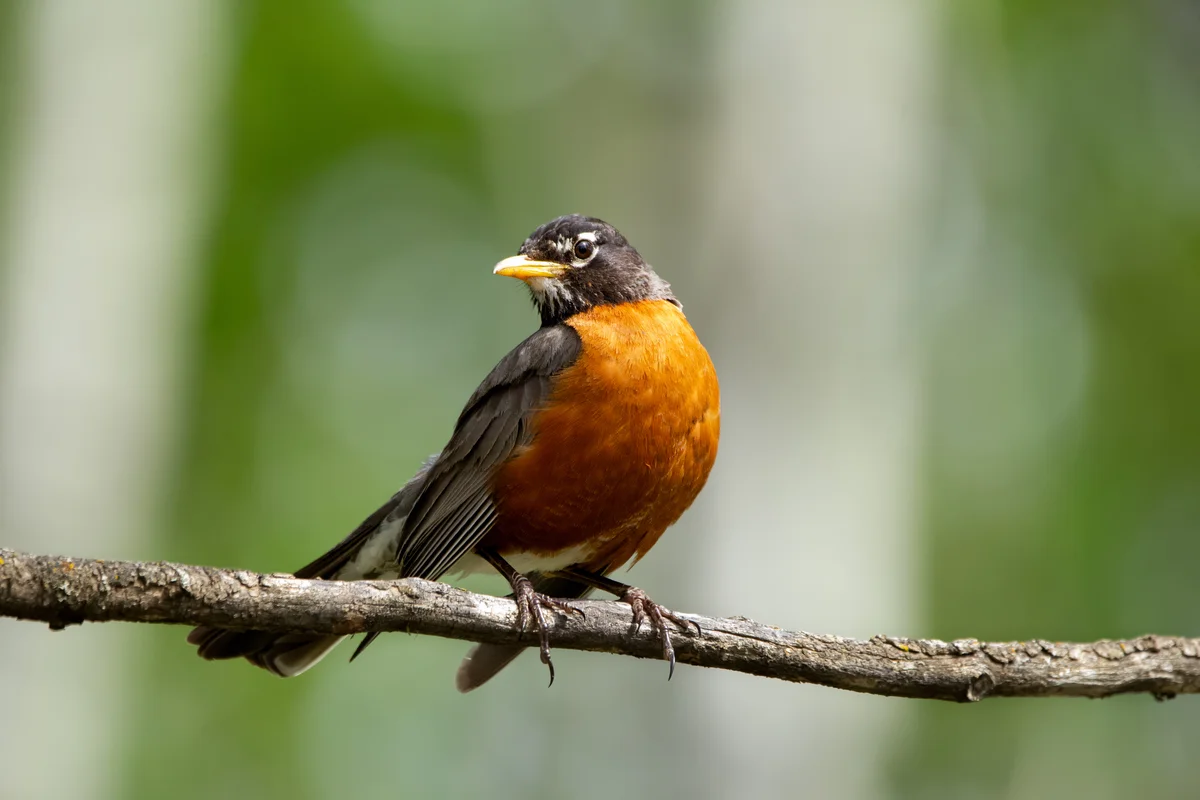
The American robin is a classic bird that symbolizes the coming of spring. They are easily recognizable with their red-orange breast and a blueish-gray back and head. They really love earthworms, but they'll likely visit your yard if you have a few bird feeders for them to feast from.
Fast Fact
In the late winter & early spring, you might be able to spot "drunk" robins who have imbibed a little too much on fermented berries.
Mourning Dove
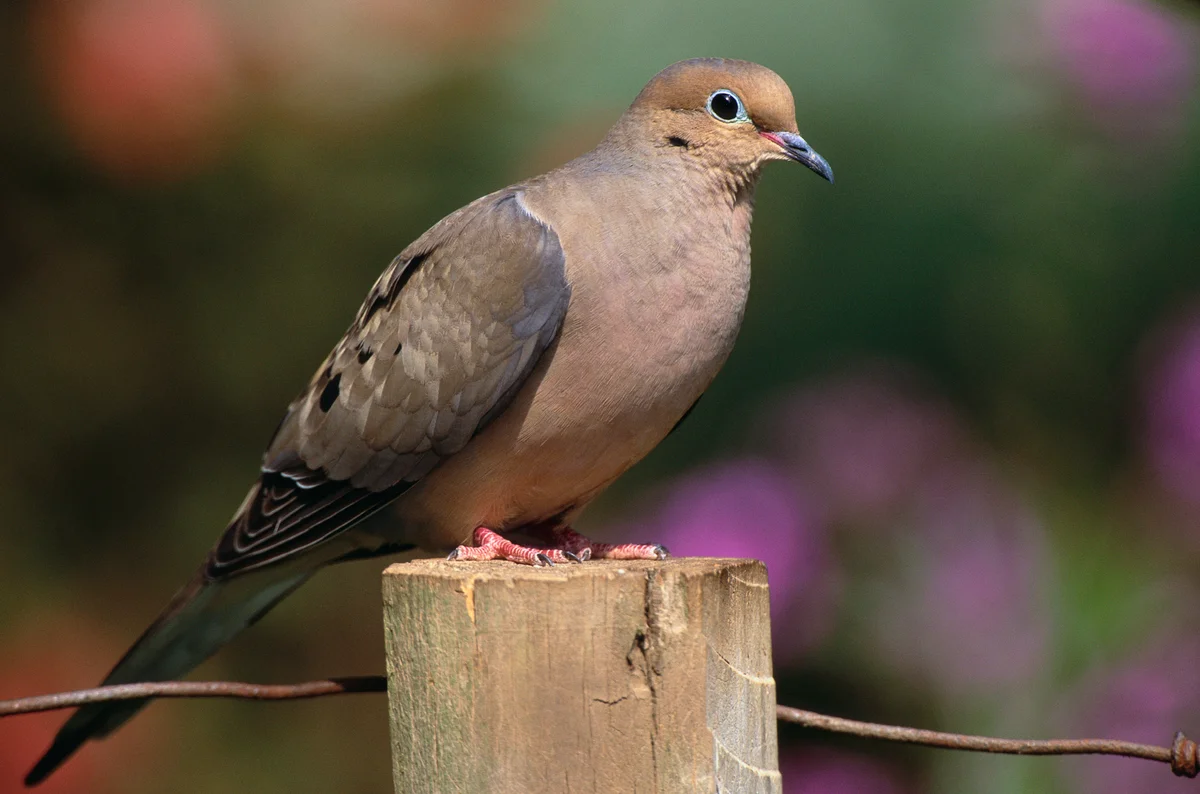
You've surely heard the woeful cooing song of the mourning dove. Though they look similar to a pigeon, the two are not the same. Mourning doves have soft grayish-tan colored feathers, giving them a subtle but lovely appearance. Bring them to your yard with flat-bed feeders, or just scatter feed on the ground.
Fast Fact
Mourning doves pair with their mates for life, and make great companions to one another. The male will scout out nests while the female chooses her favorite, and they share incubation duties for their eggs.
American Goldfinch
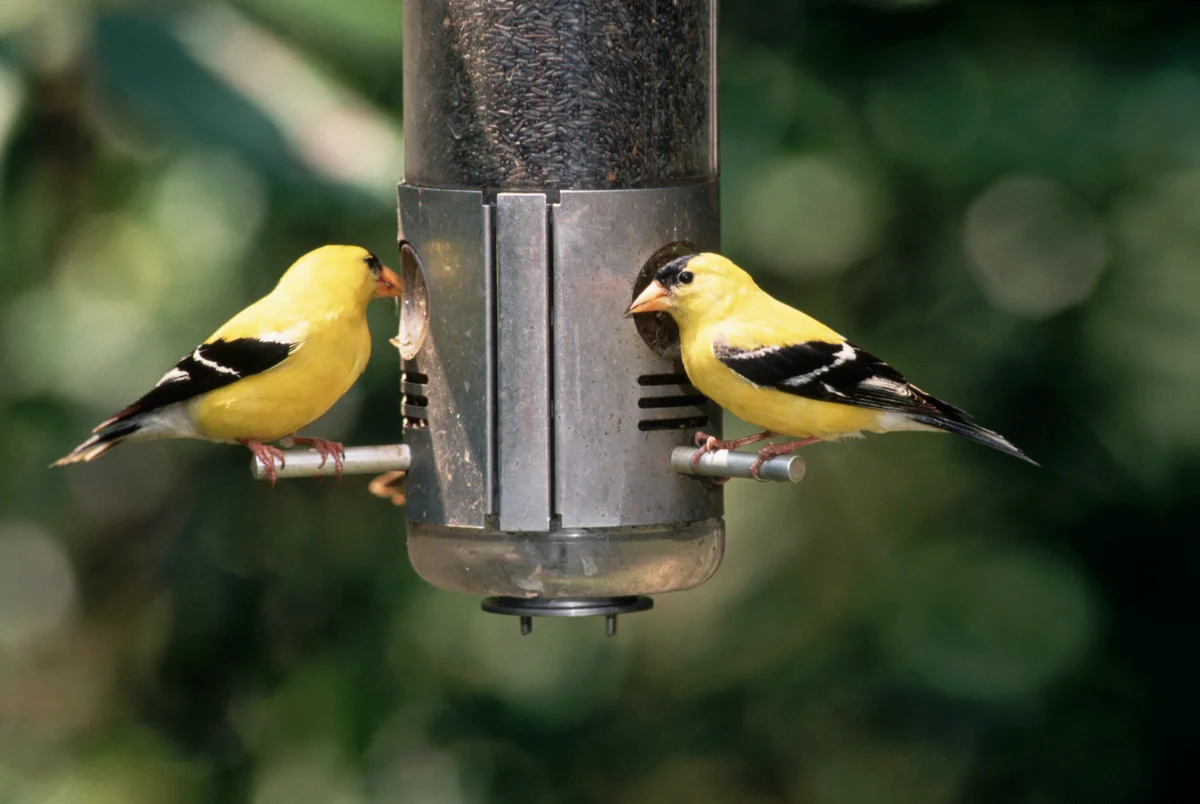
There's so much to love about the bright yellow American Goldfinch. Though females' feathers aren't quite as vibrant, you'll be able to identify them by their triangular beaks and the white strips on their black wings. They'll also sport a black patch on their forehead. This bird loves sunflower seeds in particular, but will visit almost any type of birdfeeder and feed. You can also become more popular among the finches by providing water for them.
Fast Fact
Being that goldfinches only eat seeds (no insects), their nests are a bad target for the cowbird, whose chicks require a more meat-forward spread.
Yellow Warbler
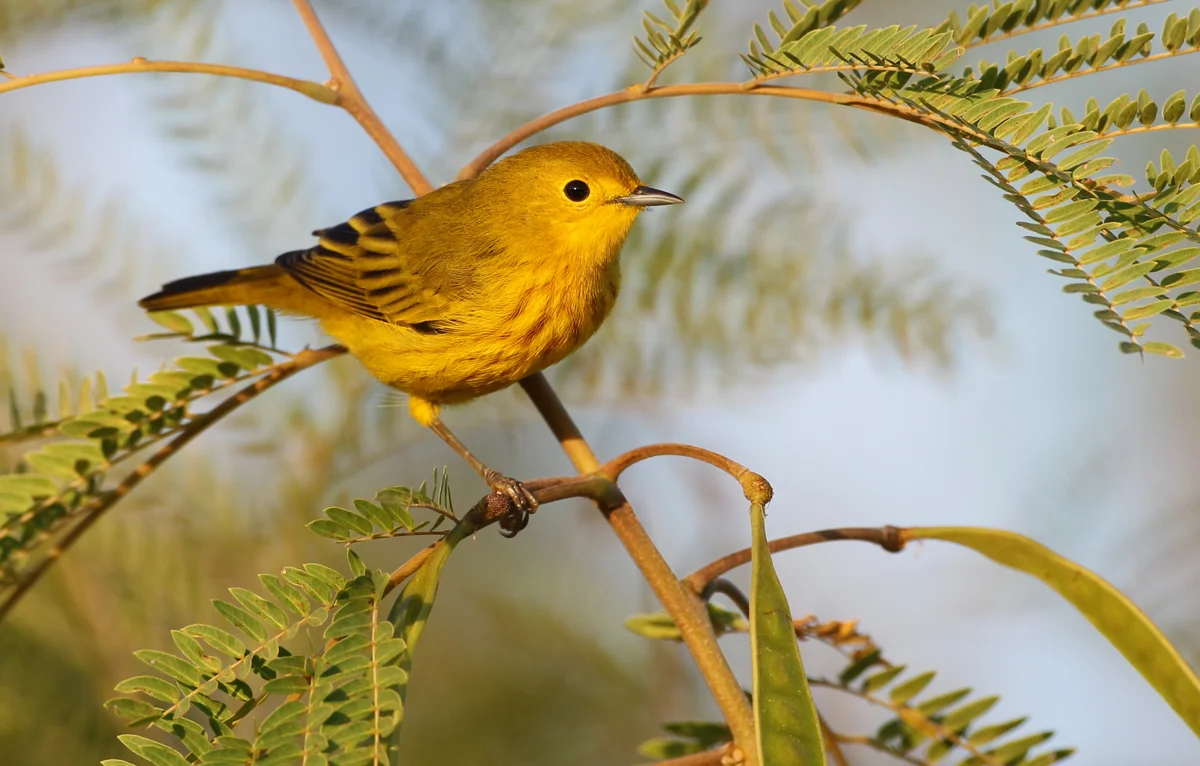
The yellow warbler is another bright yellow bird that could grace your yard. You can tell it apart from the goldfinch by its slimmer beak, and its body has more yellow and less black (no stark black wings or black spot on its head). It also has reddish-brown stripes that lightly streak its breast for a little extra detail. The warbler is also known for its fast-paced, cheerful chirping song. Attract this cutie to your house with mealworms and a moving water source to make them feel right at home. They probably won't care about your bird feeders.
Fast Fact
Warblers are experts at recognizing cowbird eggs, and will build a new nest on top of the imposter eggs. They'll keep repeating this process if the problem persists, with some nests getting 6 stories tall.
Spotted Towhee
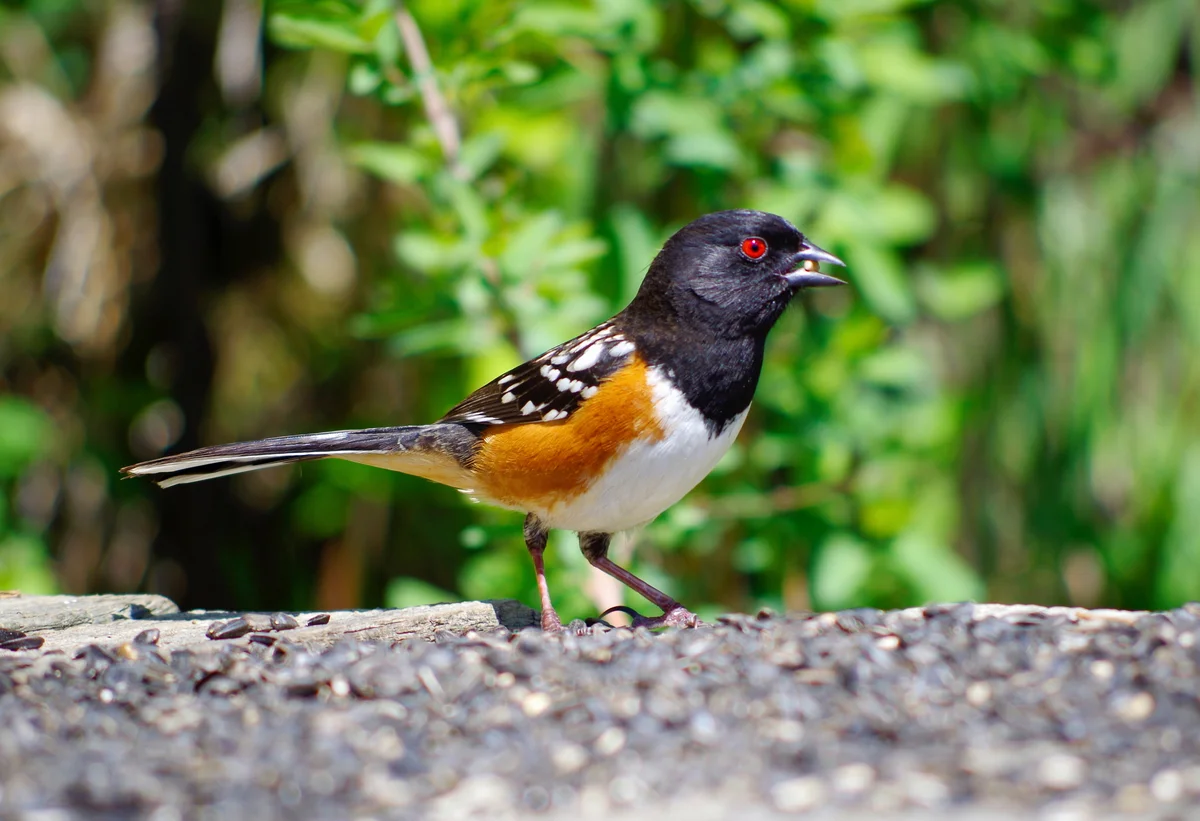
Spotted towhees are a type of sparrow, sharing the characteristic of a longer tail and thick beak. This species has a red breast, white belly, black head and body, and small white spots on its wings, so it's not too hard to identify. They love their insects in the spring and summer but will enjoy acorns, berries, and some crop vegetables in the fall and winter. You might see towhees if your property is shrubby or has overgrown sections, but you can sprinkle seeds on the ground to encourage a visit.
Fast Fact
Spotted towhees enjoy life on the ground. They build their nests on the ground or low in trees, females run away instead of flying, and they take their baths in dewy grass.
Baltimore Oriole
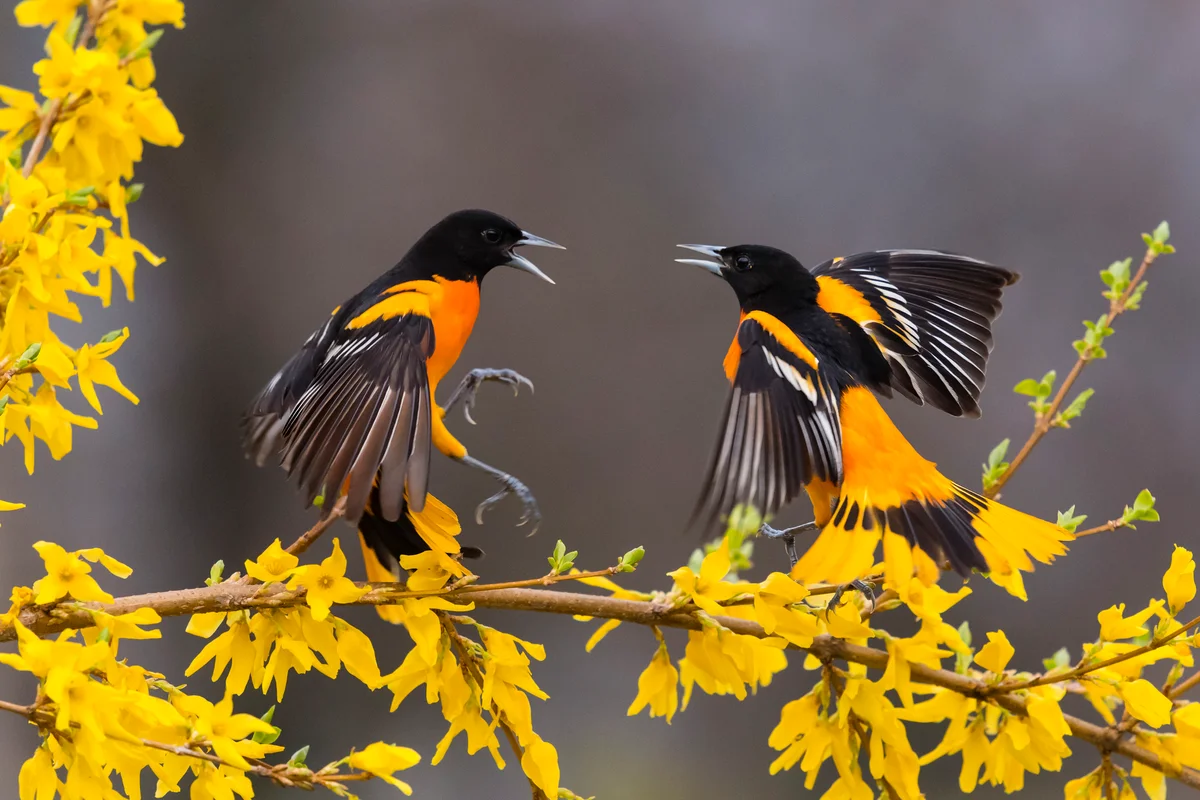
The Baltimore oriole is a delightful avian that many would love to see in their backyard. You'll be able to spot them with their black heads, black wings with white strips, and most noticeably, their bright orange body. They eat insects but also have a bit of a sweet tooth, enjoying fruits and nectar. To encourage a visit, put out a special oriole bird feeder with sugar water or hang a cut up orange in a tree.
Fast Fact
One thing that makes Baltimore orioles especially unique in the bird world is their nests. They weave together whatever pliable materials they can find (like grass or hair) and create baskets that hang high in the air at the end of sturdy branches.
Northern Cardinal
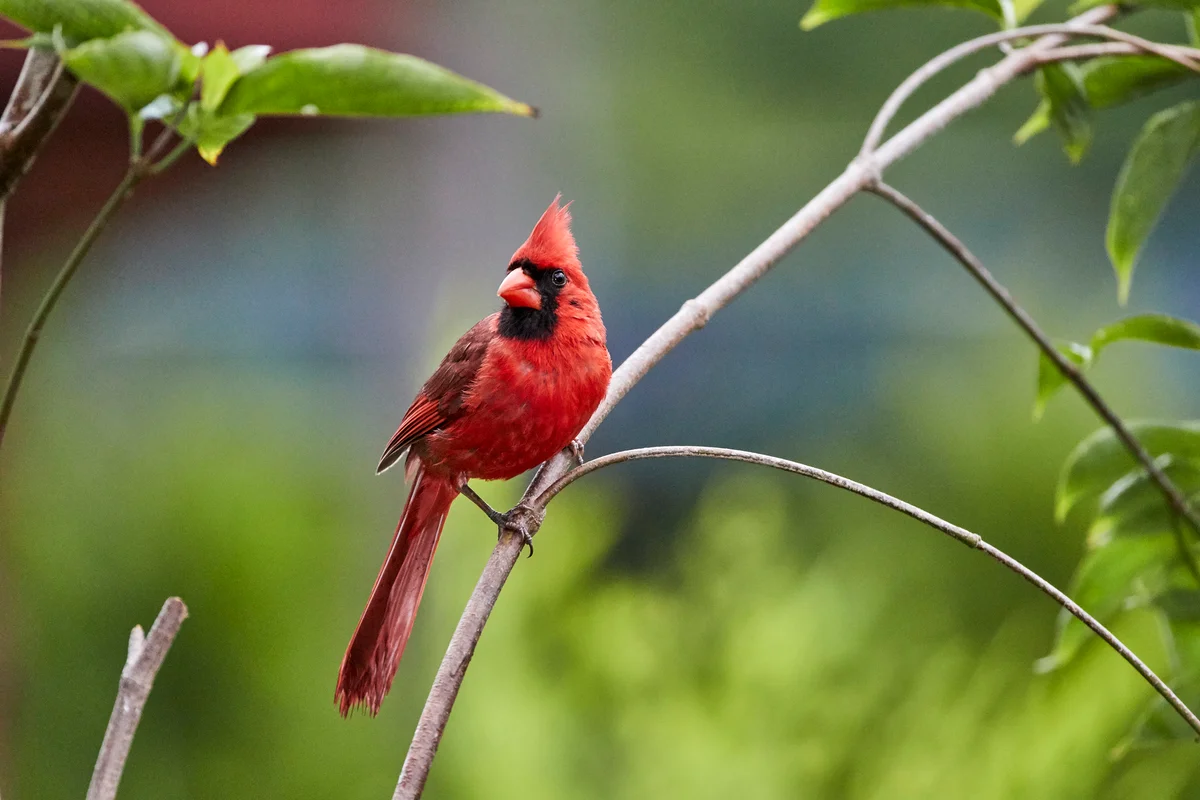
Seeing a cardinal in your yard is likely to brighten your day in the throes of a cold winter, though they stick around in the warmer months, too. The bright red coloring of males pops against a snowy background, while females have brown feathers with subtle red hues. They symbolize good things coming your way, so keep them hanging out around your house with a simple birdfeeder with sunflower seeds.
Fast Fact
Cardinals (both male & female) are fiercely territorial and will fight any bird who wants to trespass - including their own reflection in windows or mirrors. Luckily, this aggression only lasts a few weeks.
Red-Winged Blackbird
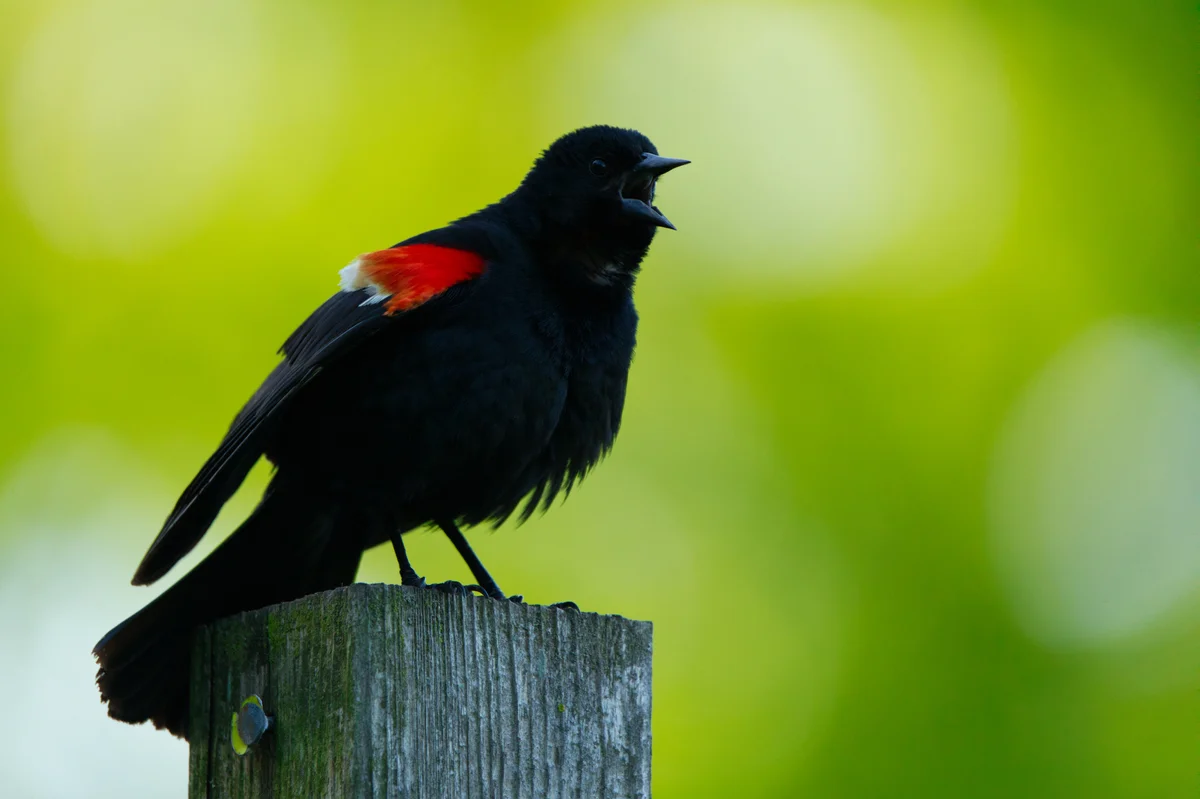
Aptly named, the male red-winged blackbird is an all-black bird, except for the red and yellow patches that appear on its upper wing. Females are brown, with still a hint of a red patch on their wings. Their diet consists mostly of insects and seeds, and they prefer to live in marshy areas. Spread grains, oats, and seeds in your yard to encourage them to visit.
Fast Fact
Red-winged blackbirds aren't monogamous, and males can have up to 15 female companions with nests in his territory. This means they are extremely territorial, even attacking birds much larger than themselves.
Tufted Titmouse
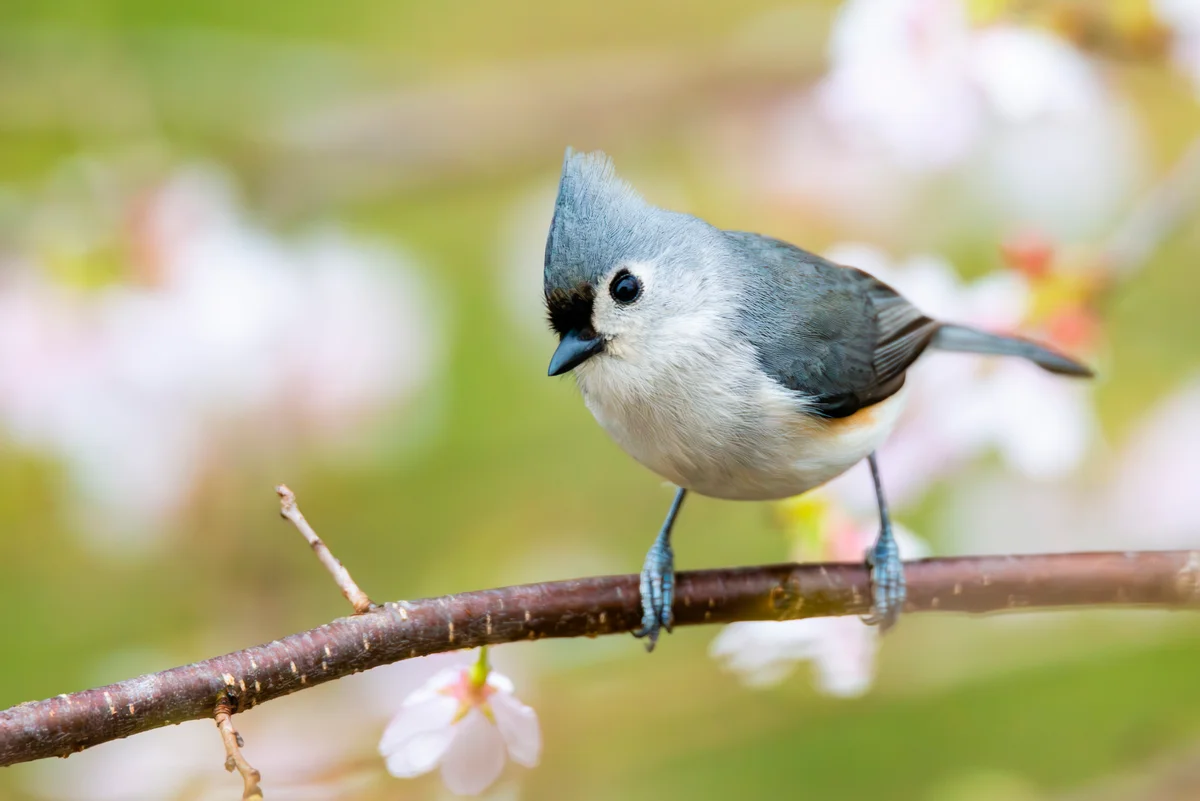
One of the more adorable songbirds that might grace your presence is the tufted titmouse. It has a soft gray back, wings, and crest, a white belly, and an orange-brown shading under its wings. They'll happily frequent your bird feeders, especially in the winter and especially if you include their favorites, like sunflower seeds or suet.
Fast Fact
Titmouses make their homes in holes made by woodpeckers. They cozy it up on the inside with animal hair, sometimes taking it from live animals!
White-Breasted Nuthatch
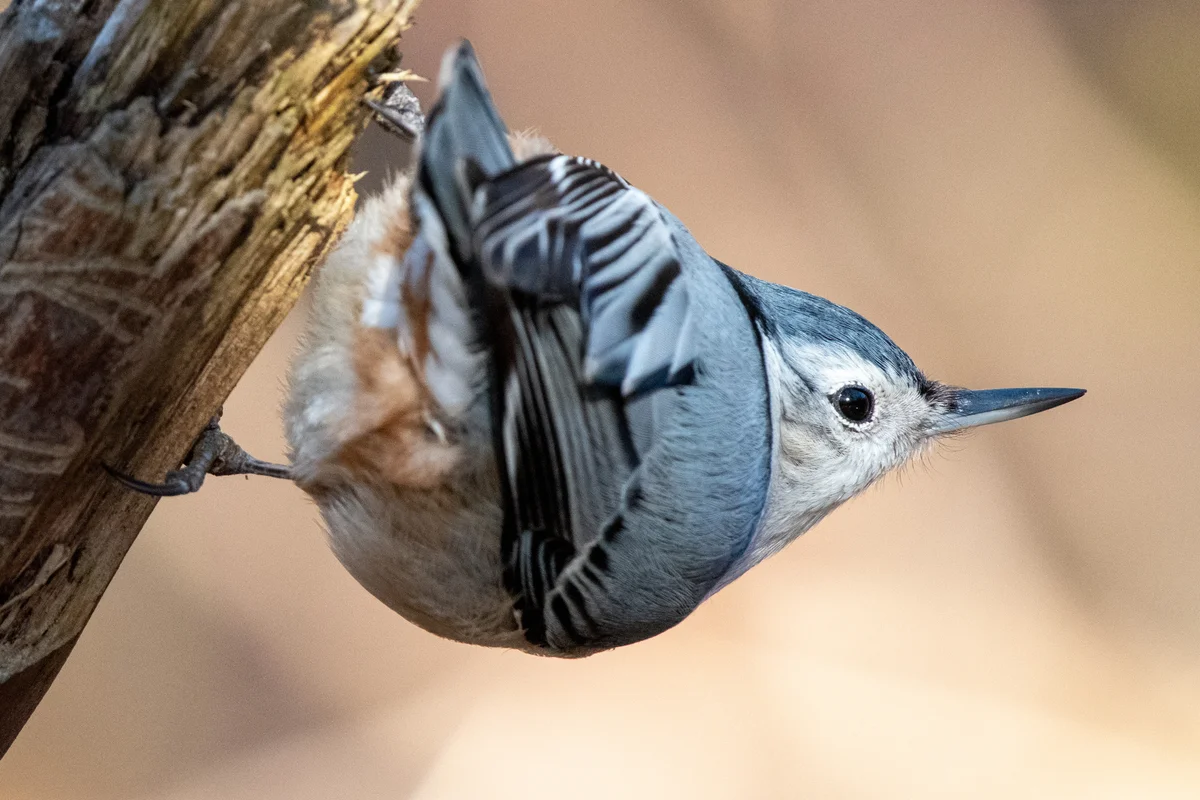
The white-breasted nuthatch is a small bird with a blueish-gray back decorated with a black cap, black collar, and black stripes in its wings, but of course, a white breast and face. The nuthatch is named for the way they eat: they wedge nuts into tree bark crevices and hack away to crack them open. They also enjoy insects, suet, and peanut butter, so those are good ways to get them to come around more often.
Fast Fact
If you're not sure if you're looking at a woodpecker or nuthatch, see if it's walking around upside down on the tree. If so, it's a nuthatch! They're famous for this agile ability that most birds simply can't do.
Gray Catbird
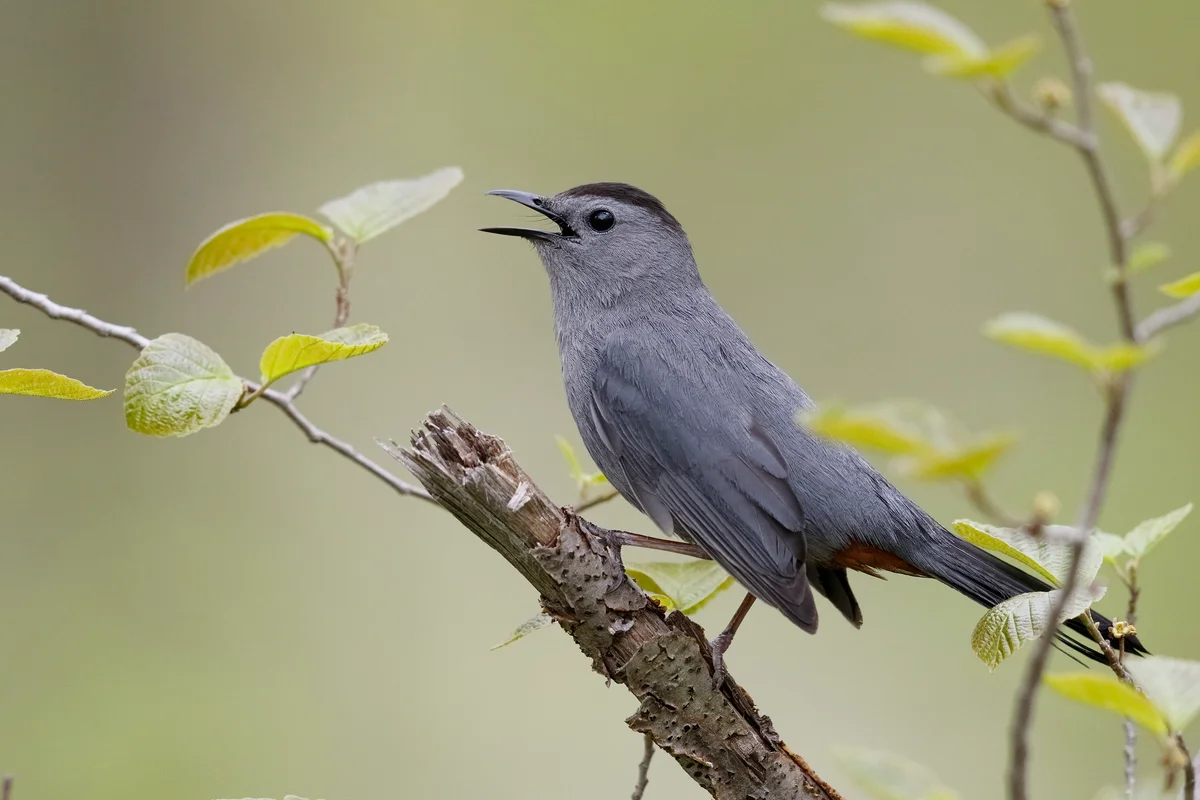
The catbird is closely related to mockingbirds and thus sings a similar song, but its call sounds distinctively like a cat's mewing. They're somewhat plain in appearance, with gray bodies, black caps, and a hint of orange at the base of their black tails. They might spend time in your backyard if you give them a nice birdfeeder and some berry bushes.
Fast Fact
If you've noticed a catbird a few years in a row in your bushes, it's probably the same one each time. Studies have shown that they like to return to previous nesting spots. So, feel free to establish rapport with your spunky feathered friend.
Backyard Birds With Bad Reputations
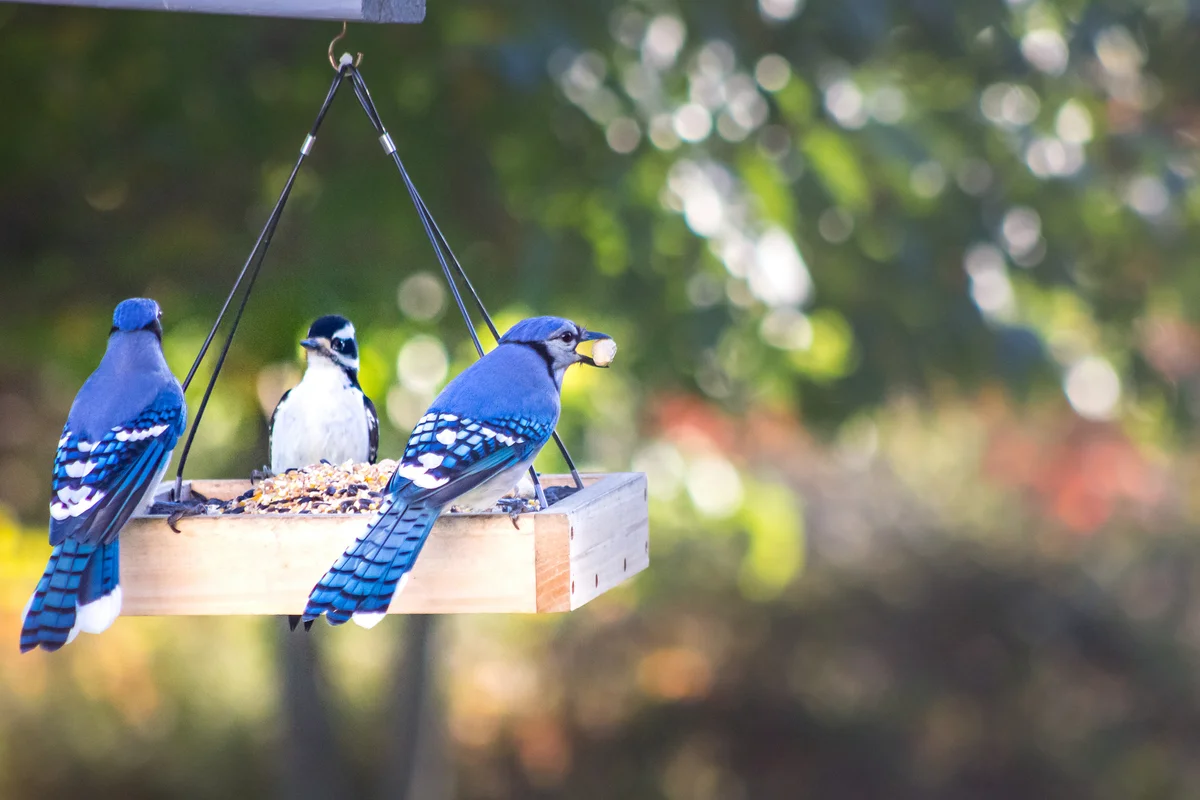
Unfortunately, not all birds that visit your yard are pleasant additions to the environment. Some can be invasive or aggressive towards other birds. They may look beautiful, but many people want to deter them rather than attract more of them.
Steller’s Jay
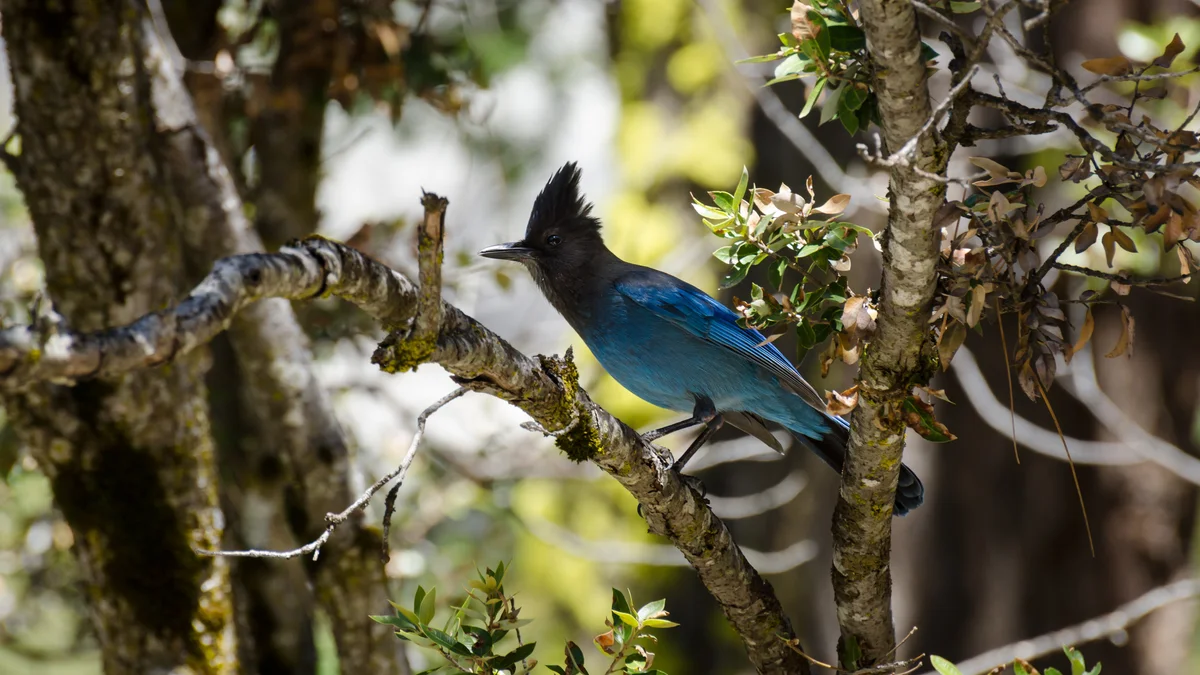
The vibrant blue feathers of the Steller's jay are hard to miss if you're in the right place! Like a common blue jay, they have a crest, but it's black along with the rest of their head and neck. They are beautiful, but aggressive to other birds, and they'll eat nestlings of certain species. They inhabit the western side of the U.S., mostly in coniferous forests. If you wanted to attract them to your yard, large seeds and nuts might get them to come - but don't include these things if you'd rather they stay away.
Fast Fact
Steller's jays eat just about anything, including insects, eggs, berries, animals, and garbage. And they certainly aren't shy about stealing other birds' hard-earned foods.
Blue Jay
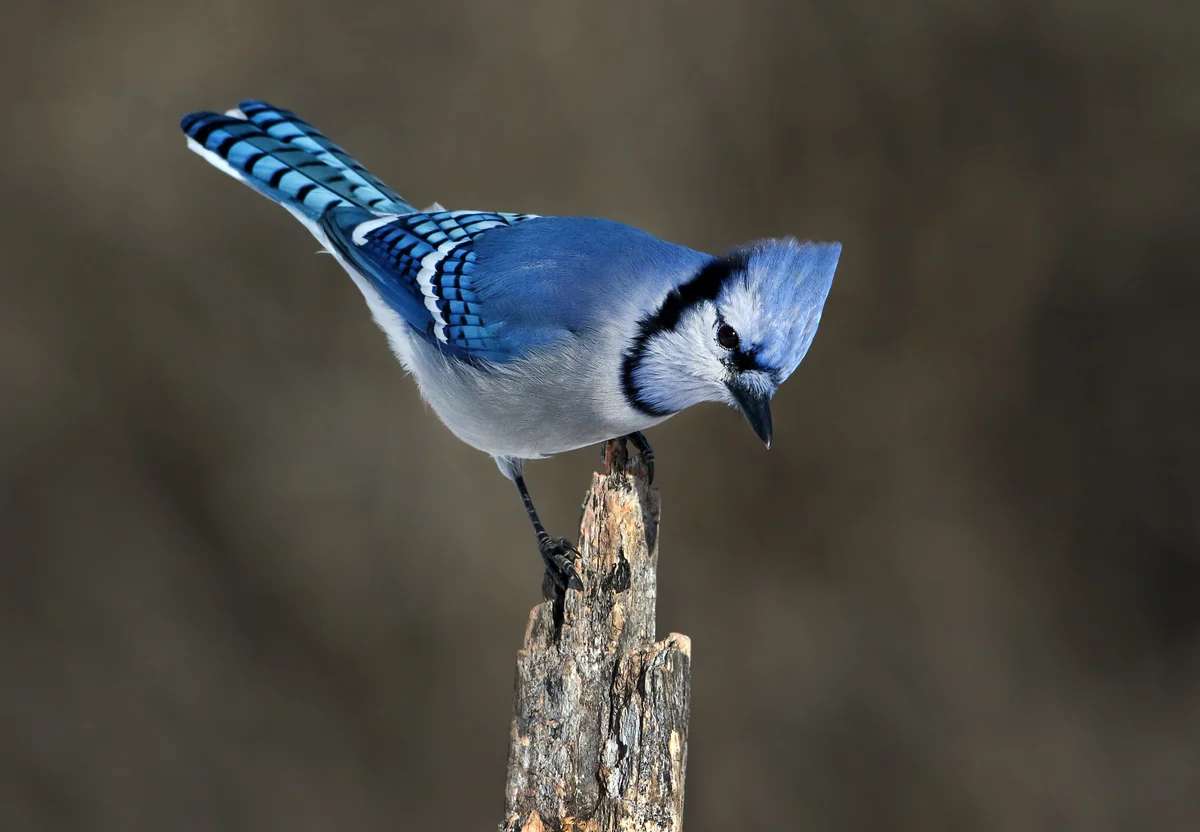
Most of us are familiar with the common blue jay. Its feathers appear blue (more on that in our fast fact), with a blue crest, white belly, and beautiful horizontal striping on its wings and tail. As nice as they are to look at, they like to hog bird feeders, and will hoard the food to store for winter. They're also aggressive towards other birds (just like the Steller's jay), and some will eat eggs and nestlings. You likely won't have trouble attracting them with a tray or hopper bird feeder and a birdbath. If you want them to leave, you can try decoy owls to scare them off, though that might also scare away the birds you do want.
Fast Fact
The blue jay's feathers are not actually blue! They are brown with melanin pigment, but the way the light reacts to their wings causes them to appear the bright blue color we named them for.
Brown-Headed Cowbird
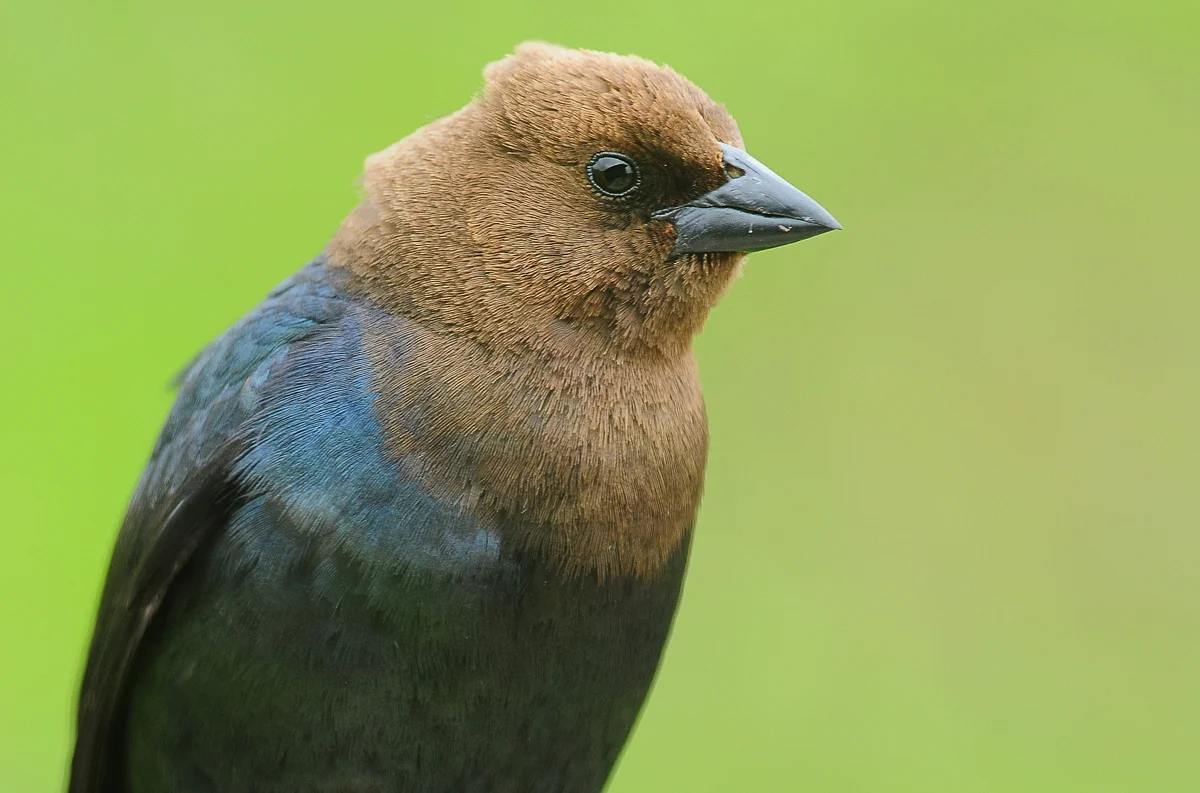
The cowbird is one of the most disliked avians from birds and people alike, known as a brood parasite. They lay a single egg in the nest of another bird that will typically develop quicker than the host's eggs. Most bird species won't recognize the egg as an intruder. Since they also grow faster than the host's hatchlings, the cowbird's young can suffocate the baby birds or eject them from the nest.
You'll likely want to deter this bird rather than invite it to your backyard. They're attracted to platform feeders and seeds that are spread on the ground, so you'll want to avoid doing so if you've seen them around. They have black bodies and brown heads and will flock with other blackbirds.
Fast Fact
Cowbirds got their name because they were seen hanging around bison and cattle, eating the insects stirred up by the animals. You'll commonly see them flocking around livestock fields.
Grackle
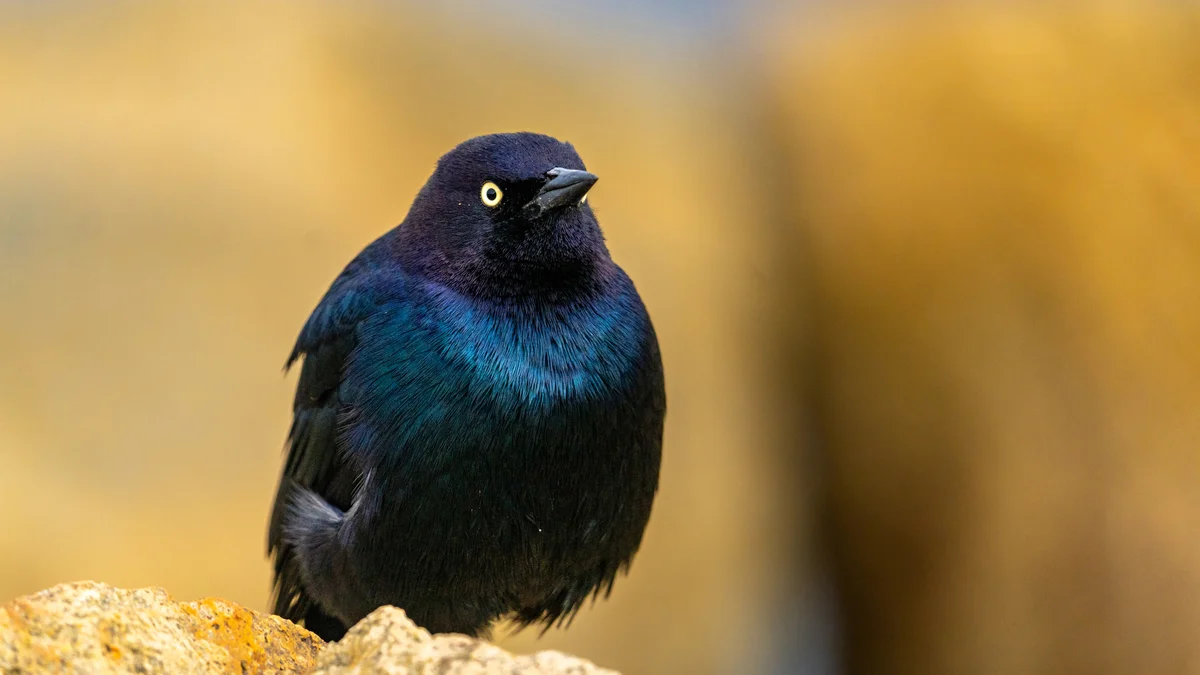
A grackle is a common blackbird you're bound to see snooping around your birdfeeder. They have a mostly black body with bright yellow eyes and long tails. Males will have a dark blue head and more reflective iridescent coloring in the sunlight. They prefer ground foraging, so if you're hoping to let other birds get a chance at your bird feeder, sprinkle birdseed on the ground slightly away from your feeder.
Fast Fact
Grackles are problematic for farmers, as they'll pull out freshly plant seeds and eat their crops. They also eat livestock feed. There are methods in place to control grackle infestations, but these are causing a decline in the grackle population.
European Starling
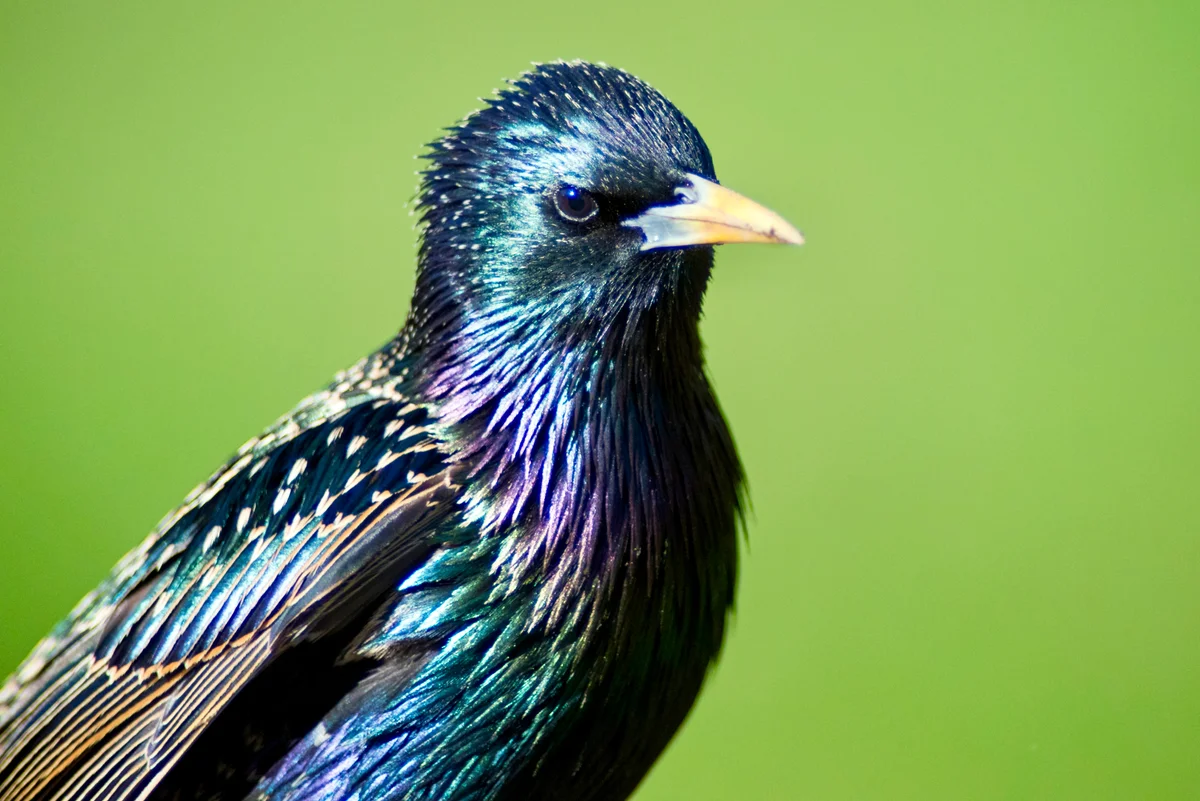
The European starling is a common bird that probably visits your backyard birdfeeder regularly, hogging it from other birds (just like the grackle does - they are related, after all). They are also invasive and will eject eggs from other birds' nests, so they're not loved by the bird-watching community. They have softer beaks, so they won't be as attracted to shelled seeds and nuts, which is one way to deter them humanely.
Fast Fact
You can tell if you're looking at a starling if it has a yellow beak, pinkish legs, and more speckled feathers, as opposed to a grackle's black beak and legs and shimmery black appearance. However, in the winter, the starling's beak will turn black and their speckles will lessen, making them harder to differentiate.
Go See Which Birds Are in Your Backyard!
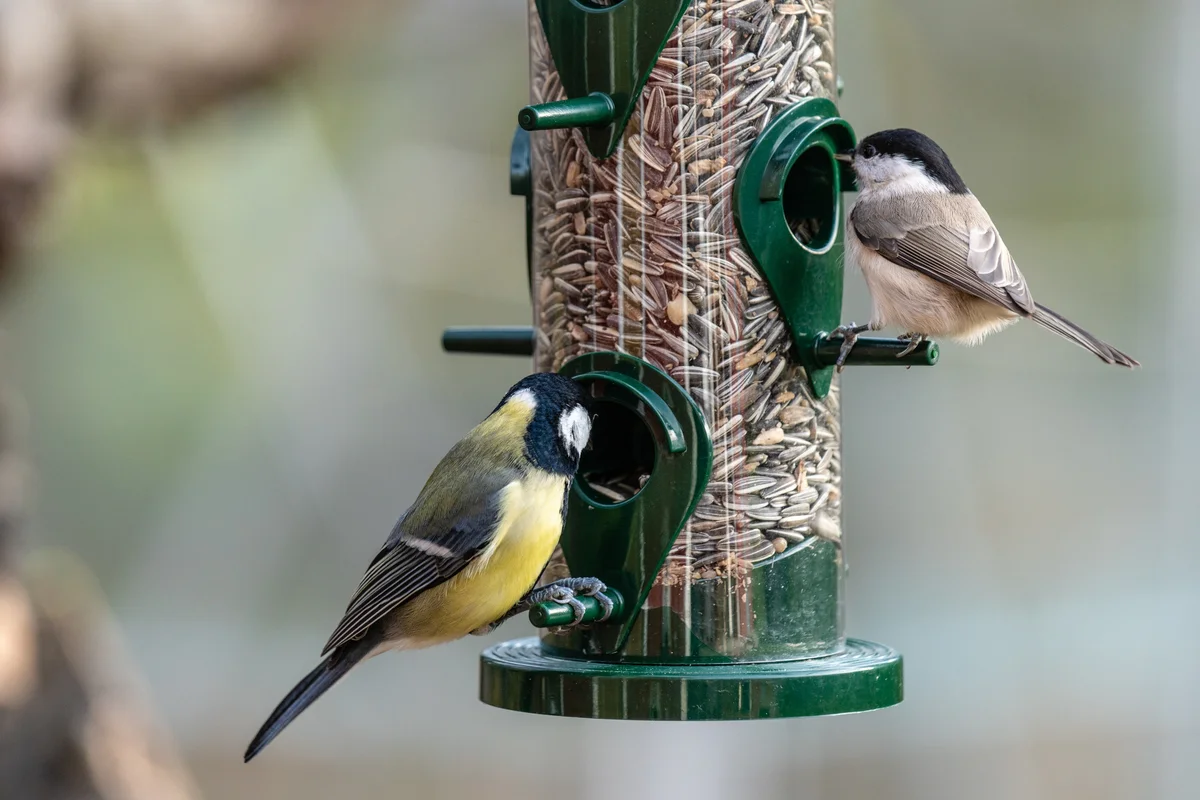
Now that you know about these common backyard birds, go outside and see if you can spot any of them! Whether by their calls, coloring, or nests, it's satisfying to be able to identify different birds and get to know their habits. Once you've got these under your belt, you'll be ready to start identifying even rarer birds that visit you.